
The mid-term elections are done and dusted.
And it has had a profound impact on investors’ sentiments. They are now rotating from high-risk, high-growth sectors to lower-risk ones.
This week, we take a look at 3 U.S. stocks that we think investors are rotating into.
Before we proceed, we have some interesting content this week that might change how you think about your portfolio!
Macro Market Pulse
Trump has a lot to think about after the Republican Party lost the Senate in the mid-term elections.
Markets were generally negative on this development, as fears of AI overspending and mid-term jitters have sent investors to safety. The S&P 500 was down by 2.7%, but its most brutal decline came on 5 November (-4.4%).
Based on the sectoral performances, it is plain to see that Trump-favoured sectors such as energy and technology declined the most, by 12% and 8.2%, respectively, for the week. We think that the Trump administration is losing control of the war in Iran, and investors are now pricing in moves by the government to restore voters’ confidence amid the current cost of living and data centre concerns.
From a 5-day perspective, we are looking at consumer staples, utilities, consumer discretionary, and financials as primary beneficiaries from the mid-term election loss for the Republican Party.

The market declines in the U.S. translated to poorer performance in the Singapore market also. The Straits Times Index (STI) was down by 3.7% for the week despite Singapore’s retail sales growth rising to 1.7% in September from 0.8% in August. The higher growth was driven by supermarkets & hypermarkets, furniture & household equipment, and computer & telecommunications equipment.

Singstat
Other than that, we had the Big 3 Singapore banks reporting earnings this week. More on those in the market roundup later.
Market Roundup (U.S.)
Apple $AAPL ( ▼ 0.52% ) : John Ternus’s first earnings report did not go down that well. While earnings for 3Q 2026 were better than expected on iPhone core sales, gross profit margin projections were lower at 45% compared to investors’ estimates of 46.3%, as it deals with higher memory costs and costs related to the ramp-up of Siri AI [Read More]
AMD $AMD ( ▲ 11.04% ) : AMD had itself a strong 3Q results, as it beat expectations. Revenue was up by 45% as data centre sales doubled, and its CEO said that it can fulfil demand from its customers. It is guiding that server revenue could double in 2027 and AI data centre growth to accelerate. [Read More]
Palantir $PLTR ( ▲ 3.48% ) : Palantir is riding high with its recent 3Q results. Revenue almost doubled from a year ago, and the commercial segment surpassed its government segment for the first time in terms of revenue. [Read More]
McDonalds $MCD ( ▼ 0.55% ) : McDonald’s 3Q results were mixed. Earnings beat expectations but revenue fell short. Same-store sales declined by 0.2% for restaurants that have been open for at least 13 months, but overall same-store sales are up by 1.5%. [Read More]
Uber $UBER ( ▼ 0.28% ) : Uber’s results topped expectations. Revenue grew by 10%, driven by its food delivery (+23%) and freight (+34%). However, its core ride-hailing unit was down by 2%, missing estimates. The company blames high fuel prices and tighter driver availability in international markets [Read More]
Market Roundup (Asia)
Yum China $YUMC ( ▲ 0.36% ): Yum China’s 3Q results were mixed. Revenue was up by 8%, but investors were more worried about its softer same-store sales. It is navigating challenging consumer conditions in China and is aggressively expanding its stores and increasing efficiency gains [Read More]
DBS: 3Q results missed expectations, as Singapore’s biggest bank reported that its net profit was down by 5% due to a 65% decline in markets trading income. On the positive side, its net interest income grew by 4%. [Read More]
OCBC: OCBC, meanwhile, reported a slight beat in its earnings. Net profit was up by 3% boosted by strong performance in its wealth management and wholesale banking businesses. Net interest margin fell by 18 bp to 1.66% amid a lower interest rate environment [Read More]
UOB: UOB is having a strong quarter. Net profit grew by 182% but ultimately missed consensus forecast. The rise in profit came from a low base last year, as it recorded credit losses. Net interest margin was down by 14 bp to 1.68%. [Read More]
Beng Kuang: Beng Kuang’s earnings rose by 175% in 3Q 2026 boosted by offshore lifecycle work. Orderbook is now at SG$59.8 million for offshore lifecycle, while the shipbuilding orderbook is at SG$3.9 million. [Read More]
7 Stocks You May Never Need to Sell

Buying a stock is easy. Finding one you may never need to sell is harder.
This free report reveals seven blue-chip companies selected for financial strength, durable demand and long-term potential to hold up when markets turn ugly.
Content Highlights
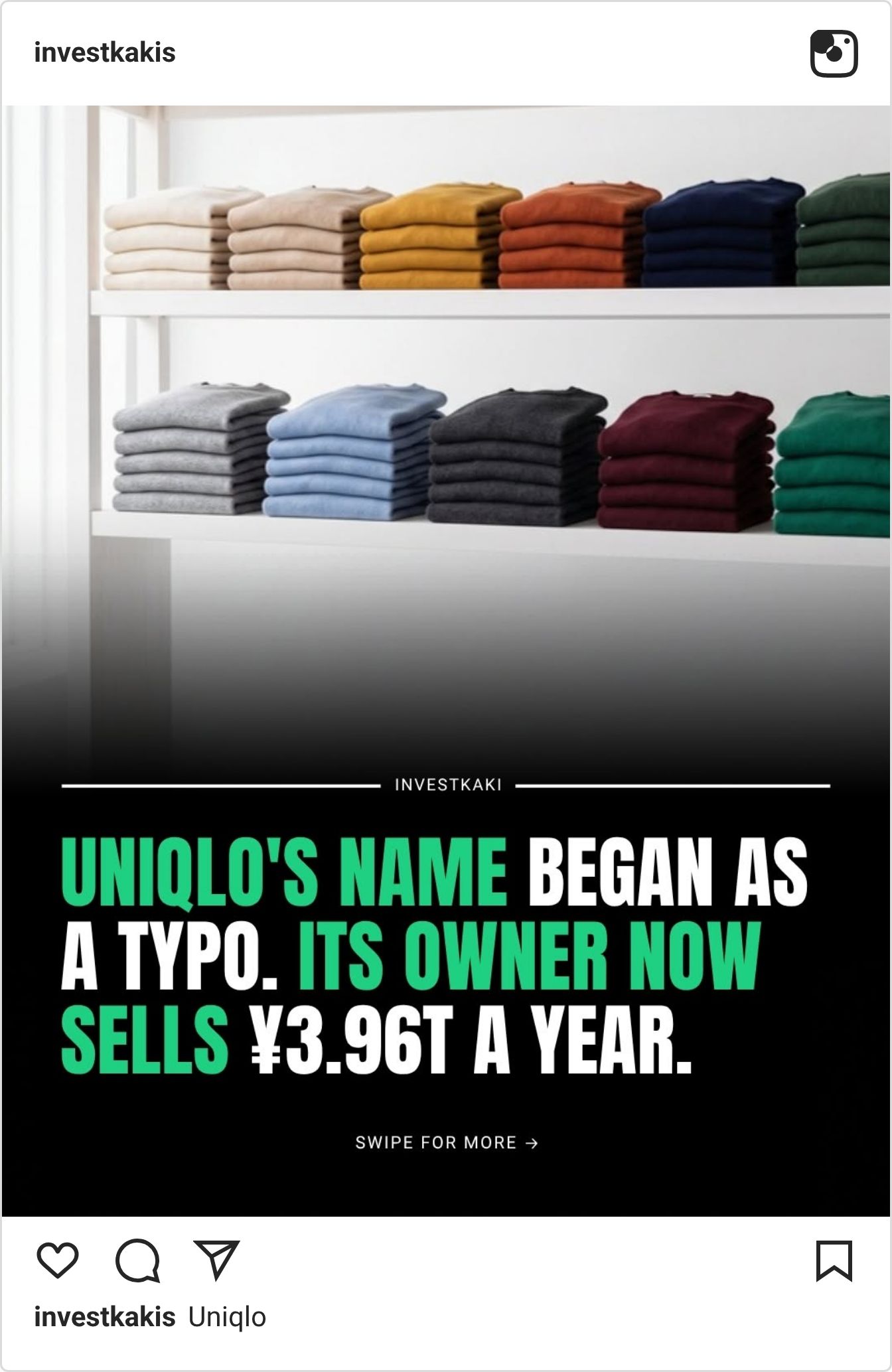
Uniqlo’s story.
📈 Grab Your FREE 5-Min Investor Guide
Receive bite-sized market updates and actionable stock ideas - so you stay informed without spending hours researching.
Stock Idea 1: NextEra Energy
NextEra Energy is a utility company providing and selling electricity to retail and wholesale customers in North America.
💪 Investment Case: Our thinking on NextEra Energy was formed by the utility sector and the share price performance of the company. On the day after the mid-term election, most sectors and companies fell. But the utility sector declined the least, by 0.7%, and NextEra’s share price was down by only 0.2%.
5-year beta for the company is 0.60, which indicates that it’s not very correlated with overall market movements.
We like the defensive nature of utility companies like NextEra Energy, but also the upside that is coming from the booming demand for energy by data centre companies. By market capitalisation, NextEra is the biggest utility player in the world.
We are currently looking at its valuation, where its price-to-earnings ratio is currently at 15.9 times compared to its peers’ average of 21.9 times.

SimplyWallSt
❓ Market Analysts: Average target price is at US$94.59 with an implied upside of +7.2%

Stock Idea 2: Costco
Costco operates membership warehouses where its members can buy groceries and other retail goods.
💪 Investment Case: We have covered Costco a couple of times now, but this shows how strong we think the stock is no matter the situation in the overall market. The company’s share price was up by 1.8% on 5 November after the election, tracking the consumer staples sector decline of 0.8%.
Cost of living concerns are the most important issue for U.S. voters and are the reason why the Republican Party lost its mid-term elections. We think that Costco’s offerings of bulk items at a discount provide value to many U.S. consumers who are now struggling with a higher cost of living.
Costco’s valuation has been high, but is well deserved. We think that Costco is positioned for a bigger upside compared to Walmart, the biggest player in the market, due to its offerings of value to customers.

SimplyWallSt
❓ Market Analysts: Average target price of US$1,083 with an implied upside of +1.7%

Stock Idea 3: Berkshire Hathaway
Berkshire Hathaway is an investment holding company, with investments in insurance, freight, rail transportation, utility, and technology sectors.
💪 Investment Case: Greg Abel has big shoes to fill with Warren Buffett resignation as CEO, but we do like Berkshire Hathaway’s historically resilient portfolio companies that are in ‘blue-chip’ sectors. 5-year beta is 0.57. Share price declined by 1.2% on 5 November after the election, which we see as a small impact from the markets.
Berkshire Hathaway has relatively fair valuations with a PER of 14.3 times, compared to its historical PER of 12.5 times and the industrial average of 14.6 times.

SimplyWallSt
❓ Market Analysts: Average target price of US$549

Join our community for more insights: https://investkaki.com/community

12 Timeless Warren Buffet Secrets Every Investor Should Know
Discover the principles behind Warren Buffet’s secrets - from identifying quality businesses to staying calm during market downtowns.