
Premium post
Lorem ipsum dolor sit amet, consectetur adipiscing elit.
Sed do eiusmod tempor incididunt ut labore et dolore magna aliqua.

Lorem ipsum dolor sit amet, consectetur adipiscing elit.
Sed do eiusmod tempor incididunt ut labore et dolore magna aliqua.

Lorem ipsum dolor sit amet, consectetur adipiscing elit.
Sed do eiusmod tempor incididunt ut labore et dolore magna aliqua.
US equities opened lower on August 31 as oil prices surged on reports of US airstrikes targeting Iranian military infrastructure, reversing some of the strong gains from earlier in the month.
Energy was the only major sector trading higher; everything else pulled back, with tech and consumer discretionary leading declines.
Despite the session's selloff, August remained a positive month for US stocks overall — the S&P 500 closed the month ahead of where it started, extending its year-to-date gains. The daily pullback is a reminder that geopolitical events can rapidly shift short-term positioning even in a fundamentally sound market environment.
The oil move has specific implications for the Fed's path. Brent crude rising 3-4% in a session adds to services inflation that policymakers have been watching closely.
A sustained energy price spike would complicate the rate-cut timeline, putting pressure on rate-sensitive sectors — utilities, real estate, high-multiple growth — while benefiting energy names.

Fresh off its January 2026 Catalist listing, Toku's CEO Thomas Laboulle dropped a genuinely useful lesson for retail investors:
Sometimes the number that looks alarming isn't the one that matters.
Here's the interesting part.
Toku's Subscription & Licensing segment, its highest-margin business, grew just 0.6% in FY2025, while the lower-margin Usage segment surged by 21%.
On the surface, that looks like the wrong mix is winning. But Thomas reframed it well, "The trajectory of the Group's blended margins over time provides a more meaningful indicator of performance than the quarterly mix" between segments.
What stood out most was his explanation of Hong Kong revenue, which dropped over 80% from 2022 to 2024, then rebounded 227% in 2025.
Turns out this wasn't customer churn at all.
Revenue gets booked wherever a multinational client's contracting entity is registered, not where services are actually used.
Wild swings in geography don't necessarily mean anything about the underlying business.
On top of that, Thomas was refreshingly clear about pricing discipline.
With the IPO behind them, Toku isn't chasing growth through aggressive discounting anymore.
Conversations are shifting toward value and outcomes, not just price, which should support margins rather than compress them.
Plus, their acquisition philosophy is deliberately narrow.
Any deal needs to check three boxes: strategic market reach, financial accretion within a reasonable timeframe, and manageable integration risk, similar to how they approached the Activeo SEA acquisition.
Heading into 2026, Toku enters its strongest financial position since listing, with a costly borrowing facility set for early retirement and its channel partner programme positioned to scale revenue without proportional cost increases.
Want the full picture on how Toku plans to balance growth, margins, and brand risk in 2026?
👉 The complete interview is worth the read: https://www.investkaki.com/p/at-the-helm-with-toku-ceo-customer-experience-for-complex-markets
A cohort of Dividend Aristocrats — companies with 25+ consecutive years of dividend raises — is outperforming the broader S&P 500 index in 2026 on a total return basis.
These companies span consumer staples, healthcare, and industrials. Average dividend yield in the group sits between 3% and 5%, with payout ratios that suggest further increases ahead.
Dividend growth investing rewards long holding periods because reinvested dividends compound across decades. A 4% yield growing at 7% per year doubles in under 10 years.
Consistent dividend raisers share one trait — pricing power. The ability to raise prices without losing customers is the most durable competitive advantage in investing.
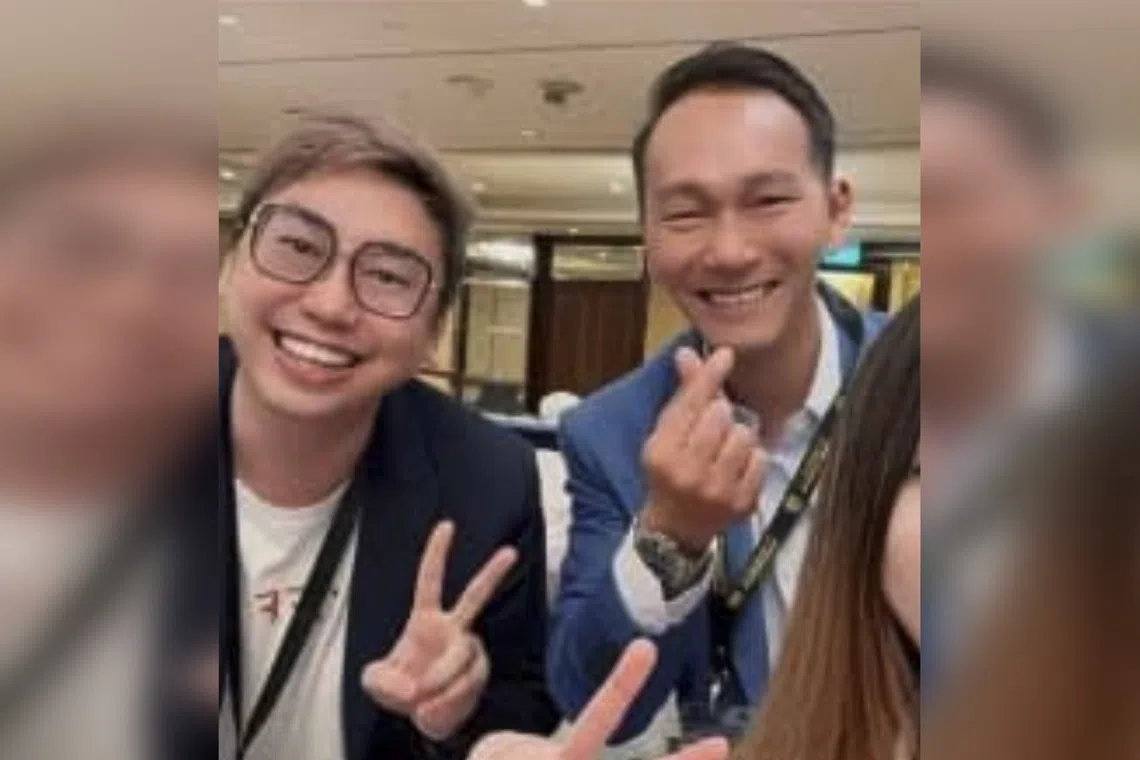
Drive lambo but cheat people of money - disgusting. Remind me of Warren Buffett's famous quote: "Wall Street is the only place that people ride to in a Rolls Royce to get advice from those who take the subway". Tbh, the market index annualized ~8 to 10% and you can maybe stretch it to max 20+% if you have a proven strategy. People who promise you otherwise are probably frauds. Read more: https://www.straitstimes.com/singapore/courts-crime/self-claimed-wealth-gurus-who-drove-lamborghinis-now-made-bankrupt-investors-worry-about-their-5m
Lorem ipsum dolor sit amet, consectetur adipiscing elit.
Sed do eiusmod tempor incididunt ut labore et dolore magna aliqua.
Lorem ipsum dolor sit amet, consectetur adipiscing elit.
Sed do eiusmod tempor incididunt ut labore et dolore magna aliqua.
Lorem ipsum dolor sit amet, consectetur adipiscing elit.
Sed do eiusmod tempor incididunt ut labore et dolore magna aliqua.
Lorem ipsum dolor sit amet, consectetur adipiscing elit.
Sed do eiusmod tempor incididunt ut labore et dolore magna aliqua.
If you've ever glanced at a REIT's profit figure and assumed that tells you how the business is really doing, Chan Iz-Lynn, CEO of BHG Retail REIT, has a different take.
Here's the interesting part. BHG Retail REIT's core assets, Beijing Wanlu and Chengdu Konggang, actually held up decently on gross rental income in 2025. But total return before taxation still fluctuated.
Why the mismatch? Chan explained that property-level profit gets swayed by non-cash items like fair value movements and impairment adjustments, numbers that have nothing to do with how the mall is actually performing day-to-day.
Her advice to investors is refreshingly practical. Skip the noisy profit line and look at occupancy, rental reversions, and tenant sales instead. That's where the real story is.
What stood out most was how deliberately BHG is repositioning its portfolio rather than just riding out a tough retail environment.
At properties like Hefei Changjiangxilu, they're actively replacing tenants with family- and youth-oriented concepts better suited to how consumers shop today.
Yes, this means short-term occupancy dips. But it's a bet on long-term relevance over quick numbers.
On top of that, Chan was upfront about why FY2025 distributions took a hit: one-off costs from a syndication loan rollover in March 2025, not a deterioration in the underlying business. Without that, DPU would've been higher.
Plus, her broader philosophy is clear. No fixed target for experiential tenant mix, just a property-by-property approach that adapts to what each local catchment actually needs.
It's a leadership style built on reading operational fundamentals over chasing headline metrics, worth understanding before you look at the yield number.
Curious how BHG is navigating China's retail landscape heading into 2026?
The full interview covers the macro picture, tenant strategy, and what to watch this year.
👉 Read the full interview here: https://www.investkaki.com/p/at-the-helm-with-bhg-retail-reit-ceo
Not every comeback story starts with a suspension notice. ASTI Holdings was halted from trading in 2022 over compliance issues.
Fast forward to January 2026, trading resumed. CEO Eddie Ng Yew Nam walked us through what actually happened behind the scenes.
Here's the interesting part.
Before ASTI could talk growth, they had to fix trust first. That meant clearing three years of overdue audits (FY2022 to FY2024), rebuilding governance from scratch, and being transparent with shareholders even when the news wasn't good.
As Eddie put it, "no one wanted to engage with us until the company resolved its compliance lapses."
That's a lesson worth remembering.
Governance isn't just a checkbox; it's the price of admission before growth even matters.
What stood out most was the balance sheet discipline that came out of the ordeal.
ASTI now enters 2026 debt-free, with over S$22 million in positive working capital.
No unnecessary leverage, just a conservative, cash-preserving approach to funding expansion.
On top of that, ASTI is quietly riding the AI wave, just not the obvious way.
Rather than chasing GPU demand directly, they're benefiting as consumer electronics increasingly embed AI capabilities, driving demand for their backend processing services.
Plus, the company returned to a S$1.31 million profit in 9M2025, with revenue growth and margin improvement as the semiconductor cycle picks up again.
Governance rebuilt. Balance sheet clean. Now comes the execution phase.
Want the full story on ASTI's turnaround, including how they're restructuring operations across the Philippines, China, and Singapore?
👉 Read the complete interview here: https://www.investkaki.com/p/at-the-helm-with-asti-ceo-rebound-at-the-horizon
Lorem ipsum dolor sit amet, consectetur adipiscing elit.
Sed do eiusmod tempor incididunt ut labore et dolore magna aliqua.
Lorem ipsum dolor sit amet, consectetur adipiscing elit.
Sed do eiusmod tempor incididunt ut labore et dolore magna aliqua.
Lorem ipsum dolor sit amet, consectetur adipiscing elit.
Sed do eiusmod tempor incididunt ut labore et dolore magna aliqua.

Lorem ipsum dolor sit amet, consectetur adipiscing elit.
Sed do eiusmod tempor incididunt ut labore et dolore magna aliqua.
Lorem ipsum dolor sit amet, consectetur adipiscing elit.
Sed do eiusmod tempor incididunt ut labore et dolore magna aliqua.
Most REIT CEOs talk about yield.
Simon Garing, CEO of Stoneweg Europe Stapled Trust (SERT), talked about something more interesting: how to get data centre-level returns without taking on data centre-level risk.
Here's the setup. SERT's logistics and industrial assets are already solid, throwing off a 6.2% initial yield with a 7.6% reversionary yield.
Steady, defensive, nothing flashy.
But data centres under development?
Garing pointed to yields on cost of 12-15%.
That's the gap every investor should be paying attention to.
What stood out most was how SERT is capturing that upside.
Instead of building data centres themselves, they've put €100 million into AiOnX, a fund run by their sponsor, structured as a mix of equity and a mandatory convertible loan.
SERT gets exposure to the development profits (their €50m equity stake is already marked up 41% in value) while carrying zero recourse if a project runs into trouble.
As Garing put it, there's "non-recourse of the funds' development or financial risk back to SERT."
That's the kind of structure retail investors rarely get visibility into: upside participation, downside protection.
On top of that, management isn't chasing the AI hype blindly.
They're still guiding for stable distributions in line with 2025, backed by 87% hedged debt and no refinancing needed until 2030.
Growth and safety, not one at the expense of the other.
If you want the full breakdown of how SERT is positioning itself across logistics, offices, and AI infrastructure, the full interview is worth a read.
👉 https://www.investkaki.com/p/towkay-talk-with-stoneweg-europe-stapled-trust-ceo
Lorem ipsum dolor sit amet, consectetur adipiscing elit.
Sed do eiusmod tempor incididunt ut labore et dolore magna aliqua.
Regear. Refinance. Reconstitute. Reposition. Reinvigorate.
That's how CEO Joshua Liaw summed up Elite UK REIT's strategy when we sat down with him for this week's Towkay Talk.
Five simple words, but each one tells you something concrete about where this REIT is headed.
Here's the interesting part: this isn't your typical "99% government tenant, stable and boring" REIT story anymore.
Occupancy jumped from 93.9% to 99.9% in just two years. Gearing dropped from a peak of 47.5% to 37.4%.
And they've been quietly diversifying away from pure DWP exposure, adding tenants like HMRC while divesting non-core assets.
What stood out most was the Peel Park, Blackpool situation.
It's the REIT's biggest asset by valuation, and it just got planning approval for a data centre development, thanks to its surprising proximity to transatlantic subsea cables and national fibre networks.
Liaw was upfront that this isn't a sign Elite UK is pivoting into data centres. It's more about unlocking value through smart asset management, even in sectors they don't plan to stay in long term.
On the Living Sector push into student accommodation, Liaw shared why they're not simply buying external assets to chase yield.
Their approach is converting properties already in the portfolio, which he says "could yield a return on investment in the high teens."
Plus, with debt maturities currently concentrated within a single financial year, refinancing talks are already underway to spread that risk out.
For income investors watching UK-exposed REITs, this interview gives a much clearer read on the roadmap ahead.
Full interview with CEO Joshua Liaw here: https://www.investkaki.com/p/towkay-talk-with-elite-uk-reit-ceo
Mobile market share down from 46.3% to 44.2% in two years. On paper, that sounds like a red flag for Singtel Singapore.
But when we sat down with CFO Arthur Lang for this week's Towkay Talk, a different story emerged. One that's less about defending market share and more about where the real money is coming from now.
Here's the interesting part: enterprise now makes up over 50% of Singtel Singapore's revenue. We're talking hyperscaler deals, AI infrastructure, quantum-safe networks, and contracts worth over S$300 million in total value. While everyone's fighting over consumer mobile plans, Singtel quietly pivoted its growth engine somewhere else entirely.
Then there's the STT GDC acquisition, a move that could reshape Singtel's data centre ambitions. What stood out most was how deliberately structured this deal is. Singtel takes a 25% stake, but because it's equity-accounted rather than consolidated, the balance sheet barely feels it. Dividend policy stays untouched. Credit ratings stay intact.
Plus, on the upcoming capex ramp to S$3 billion in FY2027, Lang was clear that a good chunk of the new spending is already backed by secured customer contracts before the money even goes out the door. That's a very different risk profile from building capacity and hoping demand shows up later.
For a company often seen as a slow-moving telco, this interview paints a leadership team playing a much more calculated game.
So here's the debate: is Singtel successfully transforming into an infrastructure and AI play, or is it just dressing up a maturing telco business with new labels?
👉 Let’s find out in this full interview with CFO Arthur Lang here: https://www.investkaki.com/p/towkay-talk-with-singtel-cfo
Moomoo has a lot of tools. Most beginners never touch half of them. Here's what actually matters.
#1. Strong local presence: Odd Lots lets you buy 1 share of any Singapore stock, no need for a full 100-share lot or thousands upfront.
#2. My options journey: options scared me too, until the Strategy Builder's visual payoff diagrams showed me risk and reward before I committed real money, with paper trading to practice first, zero downside.
#3. Moomoo AI feature: I ran a SpaceX breakdown through it and got a clear, digestible summary in minutes instead of digging through pages of reports myself.
#4. The investment community runs deep: 1.5 million users trading ideas, plus "In One Chart," an underrated way to compare stocks side by side.
#5 And if you want to see what smart money is doing, you can track Temasek and Berkshire Hathaway holdings right in the app.
None of this needs a finance degree or a five-figure account. Just the right tools, used right.
Which feature would actually change how you invest, the AI summaries or tracking institutional holdings?
👉 Full video breakdown here: https://youtu.be/HhCmC1mjgZ4

Revenue up 24% to US$87.2 million. Net profit up 45% to US$39.4 million. Gross margin climbed to 87%. EPS jumped 53%. On paper, a clean beat.
The engine behind it: ICG, sold as IC-GREEN in the US and Verdye everywhere else, is still the world's go-to fluorescence imaging agent in surgery. Volumes grew 11% overall, with EMEA up 24% and APAC up 45%, off a smaller base. US pricing actions from last year added extra fuel, too.
The balance sheet looks solid. Cash climbed to US$197.6 million, zero borrowings, plus a 1-cent dividend and an active buyback. Management isn't just sitting on cash; they're returning it.
But here's what I'm watching before getting carried away. Adjusted EBITDA margin actually slipped from 65% to 60%, even as profit grew. That's a real flag worth tracking as the company pushes into new markets and procedures.
Also worth noting: UltraGreen discontinued its UltraLinQ segment, which had contributed US$3.4 million last year. Strip that out, and continuing operations growth looks even stronger: revenue up 31%, profit up 57%. Know what you're comparing before you get excited about headline numbers.
Management guides full-year revenue of US$175-185 million, with a stronger 2H expected. Confident tone, clean balance sheet, real capital returns. Solid half overall.
So here's my question for the room: does a slipping EBITDA margin bother you here, or is topline growth and cash generation enough to look past it for now?
👉 Full breakdown here: https://www.investkaki.com/p/ultragreen-ai-s-1h2026-results-profit-up-45-here-s-what-it-means
A welcoming space for InvestKaki subscribers to discuss investing ideas, learn from fellow investors, and stay updated on the latest insights. All members can join the General channel, while MVP Club and SuperKakis members receive access to their respective private discussions and premium research reports.


