


Premium post
Lorem ipsum dolor sit amet, consectetur adipiscing elit.
Sed do eiusmod tempor incididunt ut labore et dolore magna aliqua.


Premium post
Lorem ipsum dolor sit amet, consectetur adipiscing elit.
Sed do eiusmod tempor incididunt ut labore et dolore magna aliqua.

Premium post
Lorem ipsum dolor sit amet, consectetur adipiscing elit.
Sed do eiusmod tempor incididunt ut labore et dolore magna aliqua.
HK luxury spending spurs a 'flight to quality' recovery. Structural or cyclical?
The other BT headline today: Luxury spending spurs Hong Kong's 'flight to quality' economic recovery.
Hong Kong's retail numbers are being carried by high-end spending while mass-market consumption stays subdued. Mainland Chinese tourists and a resilient local upper-middle class are the two engines.
For investors, the question is always: structural or cyclical?
Structural case: HK is repositioning as a high-value wealth hub. The government's push for family offices and private banking has permanently upgraded the economic mix.
Cyclical case: Luxury spending correlates with property wealth. If HK property stays soft, the luxury tailwind fades.
---
Watch: Chow Tai Fook (1929.HK), Luk Fook (590.HK), and Macau operators like Sands China (1928.HK) as proxies. If luxury and gaming hold while mass retail struggles, that's a structural read.
Premium post
Lorem ipsum dolor sit amet, consectetur adipiscing elit.
Sed do eiusmod tempor incididunt ut labore et dolore magna aliqua.
Premium post
Lorem ipsum dolor sit amet, consectetur adipiscing elit.
Sed do eiusmod tempor incididunt ut labore et dolore magna aliqua.
AAPL Apple — New CEO's first memo hypes Sep 9 event. What it means for valuation. [5M]
$AAPL Apple — CEO Transition + Sep 9 Event Context (5M Framework)
M1 — Mastery
John Ternus, now CEO after Tim Cook's handover on 1 Sep, comes from hardware engineering — he led the M-chip transition and the Vision Pro project. His first memo as CEO described the 9 September event as 'huge' — the iPhone 17 launch, codenamed 'Surprise and Shine.' Apple's ability to sustain premium pricing on annual hardware refreshes while growing a high-margin services layer is the clearest demonstration of product mastery in consumer tech.
M2 — Moat
The App Store ecosystem now generates over US$100 billion in annual developer billings — taxed at 15–30%. The installed base lock-in, developer ecosystem, and iCloud/services attachment all reinforce each other. No competitor has dislodged this network in two decades.
M3 — Metrics
Services gross margins run at approximately 74% — dramatically above the ~36% margins on hardware. Net cash position is US$162 billion. The stock was trading near the US$319 level heading into the event.
M4 — Management
The Ternus transition is notable but Apple has planned leadership transitions carefully. Ternus is a product engineer — not a finance or marketing executive — which signals Apple's internal priority: the next growth cycle comes from hardware-software AI integration, not cost-cutting.
M5 — Margin of Safety
At US$319 with services margins expanding, the key risk is whether iPhone 17 can sustain an upgrade supercycle narrative. Net cash of US$162B provides a floor for capital returns. If AI-on-device features drive meaningful adoption, current pricing may look reasonable in hindsight.
*Source: TechCrunch | 1 Sep 2026 | Posted via James HQ Dashboard*

Premium post
Lorem ipsum dolor sit amet, consectetur adipiscing elit.
Sed do eiusmod tempor incididunt ut labore et dolore magna aliqua.
Premium post
Lorem ipsum dolor sit amet, consectetur adipiscing elit.
Sed do eiusmod tempor incididunt ut labore et dolore magna aliqua.
S&P 500, Dow, Nasdaq all fell on Aug 31 as US-Iran strikes sent oil surging.
US equities opened lower on August 31 as oil prices surged on reports of US airstrikes targeting Iranian military infrastructure, reversing some of the strong gains from earlier in the month.
Energy was the only major sector trading higher; everything else pulled back, with tech and consumer discretionary leading declines.
Despite the session's selloff, August remained a positive month for US stocks overall — the S&P 500 closed the month ahead of where it started, extending its year-to-date gains. The daily pullback is a reminder that geopolitical events can rapidly shift short-term positioning even in a fundamentally sound market environment.
The oil move has specific implications for the Fed's path. Brent crude rising 3-4% in a session adds to services inflation that policymakers have been watching closely.
A sustained energy price spike would complicate the rate-cut timeline, putting pressure on rate-sensitive sectors — utilities, real estate, high-multiple growth — while benefiting energy names.

Why Toku's CEO Wants You to Ignore Its Revenue Mix Swings (And What to Watch Instead)
Fresh off its January 2026 Catalist listing, Toku's CEO Thomas Laboulle dropped a genuinely useful lesson for retail investors:
Sometimes the number that looks alarming isn't the one that matters.
Here's the interesting part.
Toku's Subscription & Licensing segment, its highest-margin business, grew just 0.6% in FY2025, while the lower-margin Usage segment surged by 21%.
On the surface, that looks like the wrong mix is winning. But Thomas reframed it well, "The trajectory of the Group's blended margins over time provides a more meaningful indicator of performance than the quarterly mix" between segments.
What stood out most was his explanation of Hong Kong revenue, which dropped over 80% from 2022 to 2024, then rebounded 227% in 2025.
Turns out this wasn't customer churn at all.
Revenue gets booked wherever a multinational client's contracting entity is registered, not where services are actually used.
Wild swings in geography don't necessarily mean anything about the underlying business.
On top of that, Thomas was refreshingly clear about pricing discipline.
With the IPO behind them, Toku isn't chasing growth through aggressive discounting anymore.
Conversations are shifting toward value and outcomes, not just price, which should support margins rather than compress them.
Plus, their acquisition philosophy is deliberately narrow.
Any deal needs to check three boxes: strategic market reach, financial accretion within a reasonable timeframe, and manageable integration risk, similar to how they approached the Activeo SEA acquisition.
Heading into 2026, Toku enters its strongest financial position since listing, with a costly borrowing facility set for early retirement and its channel partner programme positioned to scale revenue without proportional cost increases.
Want the full picture on how Toku plans to balance growth, margins, and brand risk in 2026?
👉 The complete interview is worth the read: https://www.investkaki.com/p/at-the-helm-with-toku-ceo-customer-experience-for-complex-markets
5 Dividend Aristocrats Are Quietly Beating the S&P 500 in 2026
A cohort of Dividend Aristocrats — companies with 25+ consecutive years of dividend raises — is outperforming the broader S&P 500 index in 2026 on a total return basis.
These companies span consumer staples, healthcare, and industrials. Average dividend yield in the group sits between 3% and 5%, with payout ratios that suggest further increases ahead.
Dividend growth investing rewards long holding periods because reinvested dividends compound across decades. A 4% yield growing at 7% per year doubles in under 10 years.
Consistent dividend raisers share one trait — pricing power. The ability to raise prices without losing customers is the most durable competitive advantage in investing.
Stop believing these "rich" gurus
Drive lambo but cheat people of money - disgusting. Remind me of Warren Buffett's famous quote: "Wall Street is the only place that people ride to in a Rolls Royce to get advice from those who take the subway". Tbh, the market index annualized ~8 to 10% and you can maybe stretch it to max 20+% if you have a proven strategy. People who promise you otherwise are probably frauds. Read more: https://www.straitstimes.com/singapore/courts-crime/self-claimed-wealth-gurus-who-drove-lamborghinis-now-made-bankrupt-investors-worry-about-their-5m
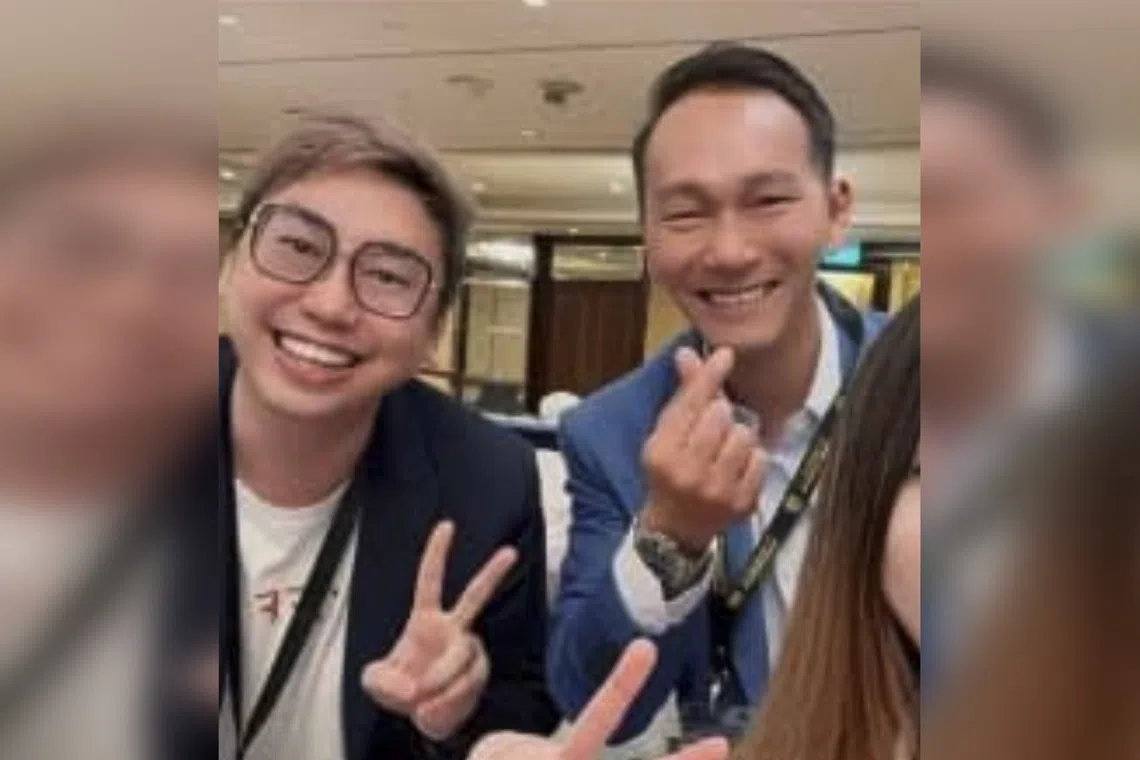
The Straits TimesSelf-claimed wealth gurus who drove Lamborghinis now made bankrupt; investors worry about their $5mBoth men declared bankrupt; investors worry about funds they placed in various property deals. Read more at straitstimes.com. Read more at straitstimes.com.

Premium post
Lorem ipsum dolor sit amet, consectetur adipiscing elit.
Sed do eiusmod tempor incididunt ut labore et dolore magna aliqua.
Premium post
Lorem ipsum dolor sit amet, consectetur adipiscing elit.
Sed do eiusmod tempor incididunt ut labore et dolore magna aliqua.
Premium post
Lorem ipsum dolor sit amet, consectetur adipiscing elit.
Sed do eiusmod tempor incididunt ut labore et dolore magna aliqua.
Premium post
Lorem ipsum dolor sit amet, consectetur adipiscing elit.
Sed do eiusmod tempor incididunt ut labore et dolore magna aliqua.

Join InvestKaki Community
A welcoming space for InvestKaki subscribers to discuss investing ideas, learn from fellow investors, and stay updated on the latest insights. All members can join the General channel, while MVP Club and SuperKakis members receive access to their respective private discussions and premium research reports.


